
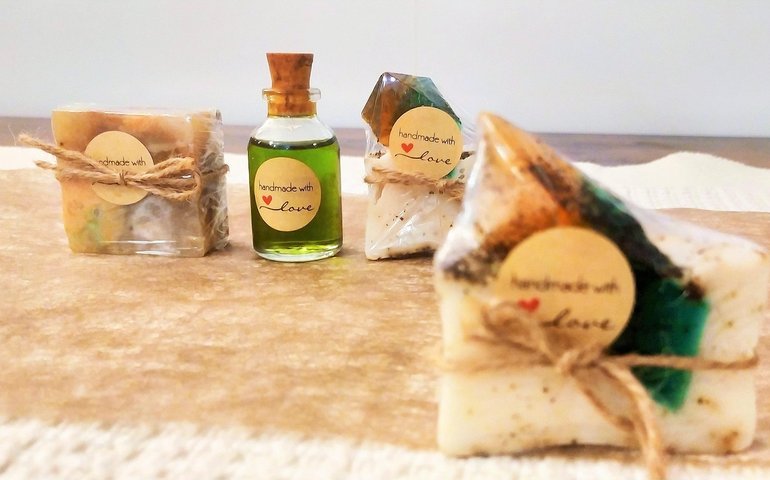
Creating a Natural Bathroom Shelf with Goat Milk Soap
Why Goat Milk Soap Earns Its Place on the Shelf
Handmade goat milk soap has become a quiet staple of the British bathroom, and for sensitive skin it is easy to see why. The milk contributes lactic acid and a naturally creamy lather, while handmade bars made by saponifying plant oils and butters tend to cleanse without stripping the skin's barrier quite so aggressively as mass-market shower gels. Glycerine, which forms naturally during the soap-making process, is usually left in a handmade bar. It acts as a humectant, drawing moisture towards the skin rather than away from it, which is exactly what dry, eczema-prone or reactive skin needs after a hot shower.
A word of caution, though: for sensitive skin the scent matters as much as the base. Bars loaded with cinnamon, clove, citrus or synthetic fragrance can sting and flare. Begin with unscented, oat, honey or calendula varieties, and patch test any new bar on the inner forearm for 24 hours before it goes anywhere near your face or chest.
Find the Right Spot Before You Style
Styling a shelf is pointless if the position is wrong. Goat milk soap needs moving air and a dry surface between uses, so choose a spot that is sheltered from the direct shower spray and from splashes at the basin. A wall shelf at chest height, a few feet from the showerhead, works far better than the ledge inside the cubicle.
- Avoid sitting bars directly above a radiator, where warmth encourages sweating.
- Keep them out of strong direct sunlight, which fades natural colour and can turn oils rancid.
- Steer clear of windowsills that collect condensation overnight.
- Give the shelf a little breathing space from the wall so air can move behind it.
If your bathroom has no extractor fan, run one anyway by leaving the door ajar and the window open for ten minutes after every shower. Humidity is the single biggest enemy of a long-lasting bar.
Dishes, Trays and Jars That Actually Work
The soap dish is not a decorative afterthought; it is the difference between a bar that lasts three weeks and one that turns to sludge in five days. Choose a dish with raised ridges or slats so water drains away from the base of the bar. Untreated pine will warp and harbour mould, so look for teak, bamboo or oiled oak, and re-oil wooden dishes every few months with a food-safe oil.
Glass apothecary jars are lovely for dry goods rather than wet ones. Fill them with bath salts, colloidal oats, cotton pads or dried lavender. If you want to display unwrapped bars, use a shallow glass or ceramic tray with a few small pebbles or a bamboo insert underneath to lift the soap clear of any pooling water. Cork and bamboo lids look warm and tactile, but only seal a jar once its contents are bone dry.
The Two-Bar Rule: Keeping Soap Dry Between Uses
This is the habit that transforms a shelf. Keep two bars in rotation: one in use by the basin or shower, one resting on a dry dish elsewhere on the shelf. Swap them daily, or at least every second day, so each bar gets a full 24 hours to dry out. A bar that never dries stays soft, wears away far too quickly and can grow a film of bacteria on its surface.
- Cut large bars in half; smaller pieces dry faster and are easier to hold.
- Never stack wet bars on top of one another.
- Shake excess water off the bar before setting it down.
- Tip standing water out of the dish after every shower.
- Use a separate dish for shampoo bars and facial bars to avoid cross-contamination.
If you shave with a bar or use one for hand washing, give each its own dish. Sensitive skin reacts to whatever has been sitting in stagnant water, so hygiene here is not fussiness, it is skincare.
Storing Your Spares and Rotating Scents
Handmade soap continues to cure and improve with age, but only if it can breathe. Keep your stash in a cool, dark cupboard, ideally in a cardboard box lined with greaseproof paper. Plastic wrap and sealed tins trap moisture and encourage the dreaded orange spots of rancidity. Add a small sachet of silica gel or a little dish of bicarbonate of soda to absorb damp.
Rotate by season. Lighter, unscented or oat-based bars suit summer when skin is already warm and prone to irritation. Richer bars with shea, cocoa butter or honey feel kinder in winter. Label each bar with the date you bought it, and use the oldest first. Three to five bars on hand is plenty for most households.
A Five-Minute Weekly Ritual
Once a week, lift everything off the shelf and give it a proper clean. Wipe the shelf with warm water and a splash of white vinegar, rinse wooden dishes and dry them thoroughly in the airing cupboard, and scrub ceramic dishes with bicarbonate of soda to shift soap residue. Check each bar for soft spots and retire any that have gone sticky or discoloured.
Dust is an often-overlooked trigger for sensitive skin, so keep the shelf uncluttered. A small dish, a glass jar of oats, a folded linen cloth and two bars in rotation is plenty. Function first, then beauty: a shelf that keeps its soap dry will always look better than one arranged purely for the photograph.
tag: Natural Beauty

Michael Grainger Author
Use ground oats, poppy seeds, or dried lavender buds to give goat milk soap a gentle scrub without microplastics or harsh synthetics.
YOU MAY ALSO LIKE

Natural Exfoliants to Add to Soap
Jul 10
10Blend powdered goat milk, Epsom salts, and dried rose petals for a relaxing bath soak that softens skin and eases tension.
read more
Make Your Own Goat Milk Bath Soak
Jul 5
10Compare paper wraps, cardboard boxes, and compostable labels to reduce plastic waste when selling or storing handmade goat milk soap.
read moreSoap Making
-

ERRIC CATONA
Reuse moulds, save soap trimmings, and plan batch sizes carefully to minimise waste and make the most of every ingredient.
May 19, 2016 at 5.12 pm
Reply
ERRIC CATONA
Find responsibly produced oils, butters, and essential oils by asking suppliers about farming practices, extraction methods, and environmental certifications.
May 19, 2016 at 5.12 pm
Reply -
ERRIC CATONA
Assemble thoughtful gift sets with complementary soap bars, a wooden dish, and a linen cloth for birthdays or festive occasions.
May 19, 2016 at 5.12 pm
Reply
Skincare
Your email address will not be published.