
Comparing Goat Milk Soap with Commercial Bars
What's Actually in the Bar
Pick up a typical supermarket cleansing bar and you'll usually find a list that runs something like this: sodium tallowate, sodium palmate, sodium cocoate, aqua, glycerin, parfum, sodium chloride, tetrasodium EDTA, etidronic acid, CI 77891, BHT. Every one of those has a job — some clean, some harden, some stop the bar going rancid on a shelf for three years, and one or two simply make it look white and smell like a mountain breeze.
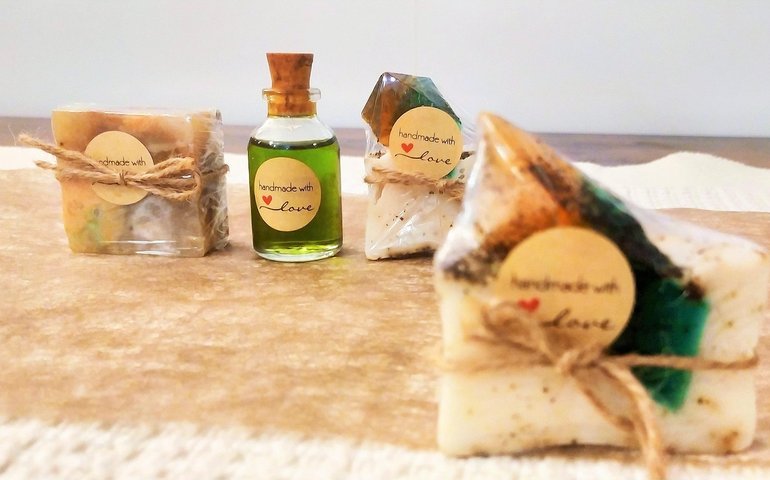
A handmade goat milk bar reads very differently. You'll see something closer to: sodium olivate, sodium cocoate, sodium shea butterate, fresh goat milk, aqua, naturally occurring glycerine, lavender essential oil, kaolin clay. Fewer than ten ingredients, most of which you could recognise in a kitchen. That difference in length isn't cosmetic — it reflects two entirely different approaches to what soap is for.
Mass-produced bars are engineered for consistency, longevity and low cost per unit. Handmade bars are made in small batches for how they feel on skin. Both are legitimate goals; only one of them tends to suit a reactive, eczema-prone or rosacea-prone complexion.
How the Two Are Made
Commercial soap is generally produced by continuous saponification: fats and oils are split at high temperature, often with tallow as the base, and the resulting neat soap is washed with salt water to remove glycerine. That glycerine is a valuable by-product and is sold on to the cosmetics industry. What's left is then dried, extruded under vacuum, milled, pressed into shape and stamped. The whole process takes hours, not weeks.
Handmade goat milk soap is usually made by the cold process method. Oils and butters are blended with a lye solution, and — crucially — the goat milk is used in place of, or alongside, the water. The mixture is poured into moulds and left to saponify, then cured on racks for four to six weeks. Nothing is removed. The glycerine created during saponification stays in the bar, typically at around 8–9%, where it acts as a humectant, drawing moisture towards the skin rather than stripping it away.
The milk itself brings lactic acid, gentle exfoliating alpha-hydroxy acids, fats and a little natural protein. Curing also drives off excess water, which is why a well-made handmade bar lasts longer in the shower than its size suggests.
Why Sensitive Skin Reacts Differently
If your skin stings, tightens or flares after washing, the culprit is rarely "dirt removal" itself. It's usually one of three things: surfactants that are too aggressive, a pH that sits too high, or fragrance and preservatives that trigger contact irritation.
True soap — handmade or commercial — is naturally alkaline, generally around pH 9–10. Where handmade bars win is in what accompanies that alkalinity. The retained glycerine buffers the wash, so skin doesn't feel squeaky and stripped afterwards. Many commercial bars compensate for glycerine removal by adding synthetic surfactants such as sodium lauryl sulphate, which clean very effectively and can leave a compromised skin barrier even more compromised.
In hard water areas, which covers much of the UK, commercial bars and handmade bars both form soap scum, but handmade bars made with a high proportion of olive or shea tend to leave a softer residue that rinses cleanly. If you have genuinely reactive skin, an unscented goat milk bar with no essential oils at all is the sensible starting point.
Reading the Ingredients List Like a Formulator
- Sodium lauryl sulphate and sodium laureth sulphate — powerful surfactants; fine for many people, harsh for a damaged barrier.
- "Parfum" or "Fragrance" — an umbrella term that can hide dozens of undeclared compounds, some of which are common sensitisers.
- Methylisothiazolinone and methylchloroisothiazolinone — preservatives linked to contact dermatitis; now restricted in leave-on products but still permitted in some rinse-off ones.
- EDTA and etidronic acid — chelating agents that bind minerals in hard water; useful, but they do nothing for your skin.
- Essential oils listed individually — a good sign, as it shows the maker is prepared to declare exactly what's in there and at what proportion.
The Environmental Picture
Handmade soap is not automatically greener, but it usually has a shorter, more transparent supply chain. Small makers typically buy oils in modest quantities, use paper or compostable wraps rather than shrink-wrapped plastic, and ship short distances within the UK. Cold process saponification uses very little energy compared with industrial drying and extrusion.
The counterpoints are worth naming. Goat milk has a real agricultural footprint, and unsustainable palm oil remains a problem across the whole soap industry — look for bars made with olive, coconut, shea, cocoa butter or UK-rendered tallow instead. Handmade soap also biodegrades readily, and because it's a solid bar with no plastic pump or bottle, it avoids the packaging burden of body wash entirely. One bar, one wrapper, done.
Choosing Well and Storing It Properly
Look for a full ingredients list in INCI format, a batch number and a best-before date. A handmade bar is typically at its best between four and eighteen months from making; older bars can develop a harmless orange spot or two as the oils oxidise, but they shouldn't smell sharp. Ask the maker when it was cured if you're unsure.
At home, keep it on a well-draining dish so it can dry between uses — a bar left sitting in a puddle will dissolve twice as fast. If you're switching from a commercial bar, give it a fortnight. Your skin may go through a brief adjustment as the barrier recovers, particularly if you've been using sulphate-heavy products for years.
Cost per bar is higher for handmade, but cost per wash often isn't: a properly cured 100g bar used daily typically lasts six to eight weeks. Judge it by what your skin does, not by the price tag on the shelf.
tag: Ingredients

Harriet Ellison Author
Natural glycerin remains in cold-process goat milk soap, attracting moisture to the skin and contributing to a creamy, non-drying lather.
YOU MAY ALSO LIKE

The Role of Glycerin in Handmade Soap
Aug 8
10Combine colloidal oatmeal and local honey with goat milk soap for a soothing bar that gently buffs and comforts dry, irritated skin.
read more
Oatmeal and Honey in Goat Milk Soap
Aug 6
10Plan shelter, grazing, and daily routines for a few dairy goats on a smallholding, including legal tagging and movement rules.
read moreSoap Making
-

ERRIC CATONA
Learn hand-milking technique, hygiene practices, and equipment cleaning to collect fresh milk safely for soap making and home use.
May 19, 2016 at 5.12 pm
Reply
ERRIC CATONA
Balance hay, pasture, and minerals to support healthy goats and produce milk with good fat and protein levels for soap.
May 19, 2016 at 5.12 pm
Reply -
ERRIC CATONA
Recognise common ailments, arrange routine vaccinations, and provide hoof care and shelter to keep your small herd thriving.
May 19, 2016 at 5.12 pm
Reply
Skincare
Your email address will not be published.